
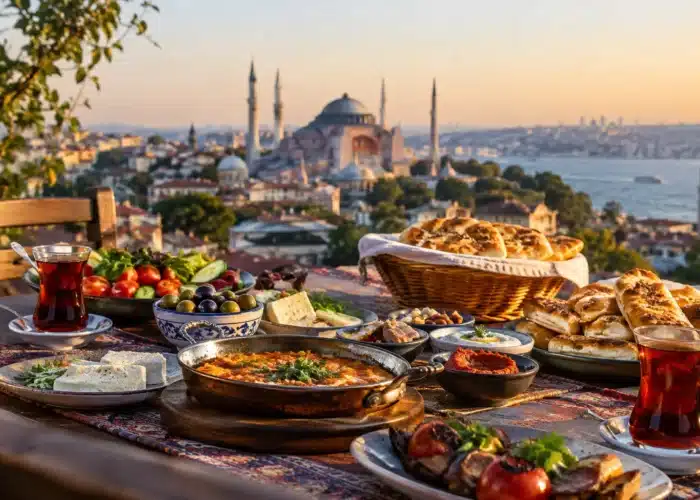
Turkey rewards travelers who arrive hungry and stay curious. A well-planned Turkey food tour itinerary is not simply a succession of meals. It is a journey through Ottoman palace kitchens, neighborhood bakeries, family-run vineyards, Aegean olive groves, and market stalls where seasonality still directs the menu. For travelers who value comfort as much as cultural depth, the right pacing and local expertise turn each meal into a more meaningful part of the trip.
The most satisfying culinary journey combines Turkey’s major cultural highlights with the regions that give its cuisine texture and variety. Istanbul introduces the country’s vast culinary vocabulary; Cappadocia adds Anatolian hospitality and wines; Ephesus and the Aegean coast bring olive oil, seafood, herbs, and exceptional produce. Rather than rushing between landmarks and restaurant reservations, allow time to understand how food belongs to each place.
How Long Should a Turkey Food Tour Itinerary Be?
For a first visit, plan seven to 10 nights. This is enough time to experience Istanbul with intention, continue to Cappadocia for a different regional perspective, and finish along the Aegean coast near Ephesus and Izmir. A shorter five- or six-night journey can work well for travelers focused on Istanbul and Cappadocia, but it requires more selectivity and fewer unplanned discoveries.
Food-focused travel should not mean eating constantly. Two carefully chosen culinary experiences a day often feel more rewarding than a crowded schedule of tastings. A private guide can adjust the rhythm around your preferences, whether that means a late breakfast after a Bosphorus cruise, a long lunch in a vineyard, or a quiet dinner after an early-morning balloon flight.
Days 1-3: Taste Istanbul Beyond the Landmarks
Istanbul is the natural opening chapter because its cuisine reflects centuries of imperial trade, migration, and maritime life. Begin in the historic peninsula, where visits to Hagia Sophia, the Blue Mosque, and Topkapi Palace can be paired with traditional Turkish breakfast. A proper spread may include several cheeses, olives, tomatoes, honey and clotted cream, eggs, fresh breads, simit, jams, and tea served in tulip-shaped glasses.
The Grand Bazaar and Spice Market offer a useful introduction to ingredients, but the most memorable tastes often come from nearby specialist shops. Sample dried fruits, lokum, pistachios, tahini, spice blends, and Turkish coffee with a guide who can distinguish everyday favorites from products packaged mainly for visitors. This context matters. Quality varies considerably, especially with sweets, saffron, olive oil, and dried goods.
On the second day, cross to the Asian side for a more local view of Istanbul’s dining culture. Kadikoy’s market streets are ideal for a progressive lunch: savory pastries, stuffed mussels where appropriate, grilled fish, seasonal meze, and dessert from a respected neighborhood confectioner. In the evening, consider an elegant restaurant experience centered on Ottoman-inspired cuisine or refined Turkish regional cooking.
Reserve one evening for the Bosphorus. The setting is as compelling as the meal, particularly at sunset, but choose the venue carefully. Waterfront dining ranges from polished, memorable cooking to restaurants that rely too heavily on their view. A knowledgeable local planner can match the experience to your priorities, whether you prefer seafood, contemporary Turkish cuisine, or an intimate meyhane-style evening of shared plates.
What to Order in Istanbul
Look for lahmacun, a crisp flatbread topped with seasoned meat and herbs; balık ekmek, a classic fish sandwich near the water; mantı, delicate dumplings often served with yogurt; and hünkar beğendi, slow-cooked meat with smoky eggplant puree. Vegetarians will find abundant options, including olive-oil braised vegetables, lentil soup, bean dishes, cheese pastries, and seasonal meze.
Days 4-5: Cappadocia’s Anatolian Table
A short flight from Istanbul brings you to Cappadocia, where volcanic valleys, cave hotels, and early balloon departures shape the day. The region’s food is deeply tied to Central Anatolia: hearty, practical, and generous. This is where travelers see how Turkish cuisine changes once the coast is behind them.
After a sunrise balloon flight, a relaxed breakfast at your hotel is often the right choice. Plan sightseeing through Goreme, the underground cities, or the valleys around Uchisar before a late lunch featuring regional specialties. Pottery kebab is the best known – meat and vegetables slow-cooked in a sealed clay vessel – but the quality depends on the kitchen and ingredients, not the theatrical presentation of breaking the pot at the table.
Cappadocia is also one of Turkey’s most intriguing wine regions. Indigenous grapes such as Emir and Kalecik Karası thrive in the area’s high elevation and volcanic soils. A private tasting offers a welcome contrast to the region’s more rustic dishes, while an afternoon at a carefully selected winery adds a quieter, less crowded dimension to the itinerary.
For dinner, seek a restaurant that treats Anatolian cooking with precision. The appeal may be a slow-braised lamb dish, handmade bread from a stone oven, or vegetables preserved and prepared in ways that reflect the local seasons. The luxury here is not excess. It is the privilege of eating regional food in its proper setting, without being rushed onward.
Days 6-8: Ephesus and the Aegean Coast
The final portion of a Turkey food tour itinerary should shift toward the Aegean. Base near Kusadasi, Sirince, or Izmir depending on your preferred balance of archaeological touring, countryside, and city energy. Ephesus deserves ample time, especially when explored with a private guide who can bring its commercial and civic history into focus before lunch introduces the modern flavors of the region.
Aegean cooking is lighter but no less expressive. Olive oil is central, along with wild greens, artichokes, tomatoes, citrus, herbs, sheep and goat cheeses, seafood, and grilled meats. Meals tend to begin with meze, but do not mistake these small plates for a minor course. A table of olive-oil dishes can be one of the most elegant meals of the trip.
In Selcuk or Sirince, pair the ancient site with a local market visit, a cooking experience, or a relaxed farm-to-table lunch. The best programs focus on technique and tradition rather than a hurried checklist of recipes. Travelers may learn how stuffed vegetables are prepared, why olive oil dishes are often served at room temperature, or how regional pastries differ from their Istanbul counterparts.
Continue to Izmir for a final evening if your schedule permits. This cosmopolitan Aegean city has a lively dining scene and a more relaxed pace than Istanbul. Try boyoz, a flaky local pastry often enjoyed at breakfast, or kumru, a warm sandwich that reflects the city’s casual street-food culture. For a celebratory final dinner, select a restaurant where local seafood and Aegean produce take center stage.
Plan for Dietary Needs Without Losing the Experience
Turkey is generally accommodating for travelers with vegetarian, pescatarian, gluten-free, or dairy-free needs, but advance planning is essential. Turkish cuisine naturally includes many vegetable-forward dishes, yet hidden butter, yogurt, flour, nuts, and meat stock can appear in traditional preparations. A private guide can communicate requirements clearly and steer you toward kitchens equipped to accommodate them.
For travelers with celiac disease or severe allergies, avoid assumptions around bread, sauces, desserts, and shared preparation surfaces. The same applies to street food: it can be excellent, but its suitability depends on both ingredient transparency and food handling. Premium travel planning is valuable here because culinary spontaneity should never come at the expense of confidence or comfort.
Why Private Planning Makes the Difference
Turkey’s culinary treasures are widely available, but access is not the same as insight. The difference between a good meal and an unforgettable one may be knowing which market vendor is seasonal, when a favorite restaurant is at its best, or how to time a countryside lunch around a private transfer and a major archaeological visit.
Bosphorus Gate Travel designs private journeys around those details, combining expert guides, comfortable transportation, and thoughtfully selected dining experiences without turning a vacation into a rigid tasting schedule. The itinerary can be shaped around a honeymoon, family celebration, cruise extension, or a deeper interest in wine, cooking, history, or regional cuisine.
Leave room for the unexpected: a bakery whose scent stops you in your tracks, tea offered after a market conversation, or a plate of seasonal greens that becomes the meal you remember most. Turkey’s food is at its best when it feels connected to the people and places around it.