
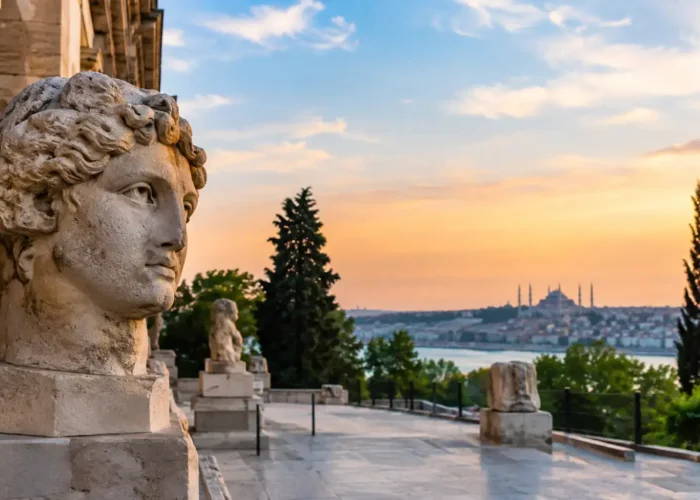
A museum day in Istanbul can begin inside an imperial palace, continue through Roman sarcophagi, and end beside the Bosphorus with contemporary Turkish art. The challenge is not finding Istanbul museums. It is choosing a collection of experiences that fits your interests, energy, and available time without spending the day in ticket lines, traffic, or overcrowded galleries.
For travelers who value cultural depth and a well-paced itinerary, the most rewarding approach is to organize museums by neighborhood and historical theme. Istanbul is far too layered to treat as a checklist. A privately curated day allows time for the details that make each site memorable: an Ottoman calligraphy panel, a Byzantine mosaic, a view from a palace terrace, or a conversation with an expert guide who can connect the objects to the city outside.
The Essential Istanbul Museums for First-Time Visitors
Topkapi Palace Museum
Topkapi Palace is the natural starting point for travelers interested in the Ottoman Empire. For nearly four centuries, this was the administrative and ceremonial center of an empire that reached across three continents. Its courtyards, pavilions, kitchens, treasury, and gardens reveal a more intimate side of imperial life than the palace’s imposing exterior suggests.
The Imperial Harem is especially worthwhile, but it requires a separate admission ticket and often has its own entrance line. This is one of the places where advance planning makes a meaningful difference. A knowledgeable private guide can bring context to the rooms, rituals, and people behind the architecture rather than simply moving you through the palace complex.
Allow at least two to three hours if you plan to see the Harem and enjoy the views over the Golden Horn, Bosphorus, and Sea of Marmara. Travelers with a strong interest in Ottoman history may prefer a slower half-day visit.
Istanbul Archaeological Museums
Just below Topkapi Palace, the Istanbul Archaeological Museums hold one of the region’s most important collections of ancient art and archaeology. The highlight for many visitors is the Alexander Sarcophagus, renowned for its remarkably preserved relief carvings. The collection also includes artifacts from Anatolia, Mesopotamia, Egypt, the Levant, and the classical world.
This is an excellent choice for guests who want to understand Istanbul as more than an Ottoman or Byzantine capital. The objects tell the story of civilizations that shaped the wider eastern Mediterranean and Middle East. Because the galleries can be dense, this museum rewards visitors who focus on a few exceptional pieces with expert interpretation rather than trying to see every room.
Hagia Sophia: A Vital Historical Note
Hagia Sophia is frequently included in conversations about Istanbul museums, but it is no longer a museum. It functions as a mosque, and visiting arrangements, access areas, and regulations can change. It remains essential for understanding Istanbul’s Byzantine and Ottoman past, yet guests should plan their visit with care and respect for prayer times and current dress expectations.
A well-organized Old City itinerary often pairs Hagia Sophia with Topkapi Palace and the Basilica Cistern. The contrast is striking: a former cathedral and imperial mosque, an Ottoman palace, and an underground Roman water reservoir within a short walk of one another. This combination provides an exceptionally strong introduction to the city’s layered history.
Museums That Add a Different Perspective
Turkish and Islamic Arts Museum
Across from the Blue Mosque, the Turkish and Islamic Arts Museum is housed in the former palace of Ibrahim Pasha. Its collection of carpets, manuscripts, woodwork, ceramics, and ethnographic displays offers a refined introduction to Islamic artistic traditions.
It is often less crowded than the major Old City monuments, making it a particularly appealing stop for travelers who want a quieter, more contemplative museum experience. The historic building itself is part of the appeal. A visit here works well after the Blue Mosque or before lunch in Sultanahmet.
Dolmabahce Palace
Dolmabahce Palace presents a dramatically different vision of Ottoman power. Built in the 19th century along the Bosphorus, it combines Ottoman ceremonial traditions with European-inspired grandeur. Crystal chandeliers, elaborate staircases, gilded interiors, and waterfront salons create an atmosphere closer to a European royal residence than the inward-looking courtyards of Topkapi.
This is a strong option for travelers who appreciate architecture, decorative arts, and scenic settings. It is also convenient to combine with a Bosphorus cruise or a private drive along the waterfront. Photography policies and guided-route arrangements may vary, so flexibility is useful when setting the schedule.
Istanbul Modern
For a view of Turkey beyond its imperial past, Istanbul Modern brings contemporary art into the conversation. Located along the waterfront in Karakoy, the museum presents modern and contemporary works by Turkish artists alongside international exhibitions. Its setting makes it an easy addition to a day that includes Galataport, Karakoy, Galata, or a Bosphorus experience.
This museum is particularly suited to travelers who enjoy design, photography, film, and modern visual culture. It also provides a welcome change of pace after a morning among ancient monuments. Exhibition programs rotate, so the experience depends on what is on view during your travel dates.
Pera Museum and the Beyoglu District
Pera Museum is a rewarding stop in Beyoglu for guests drawn to 19th-century Orientalist painting, Anatolian weights and measures, and rotating exhibitions. Its best-known work, Osman Hamdi Bey’s The Tortoise Trainer, is a highlight for many visitors interested in Turkish art history.
The museum pairs naturally with the character of its neighborhood. Afterward, continue through the historic streets around Galata and Istiklal Avenue, or pause for a carefully chosen lunch or coffee. This is less about ticking off landmarks and more about experiencing the cultural texture of modern Istanbul.
How to Build a Museum Day That Feels Effortless
The best Istanbul museums itinerary depends on what you want the city to reveal. First-time visitors typically benefit from an Old City route centered on Topkapi Palace, Hagia Sophia, the Basilica Cistern, and the Archaeological Museums. This is history at its most concentrated, but it can be physically demanding and busy during peak periods.
Travelers returning to Istanbul may prefer a more specialized day. Dolmabahce Palace, Istanbul Modern, and a Bosphorus cruise create a graceful progression from late Ottoman splendor to contemporary creativity. Art-focused guests might combine the Turkish and Islamic Arts Museum with Pera Museum and select galleries in Beyoglu.
Avoid scheduling too many major institutions in a single day. Three meaningful visits are generally more rewarding than six rushed stops, especially when security procedures, walking distances, and traffic are factored in. Families may also prefer a lighter program, perhaps pairing one substantial museum with the Basilica Cistern, a scenic cruise, or an engaging food experience.
Museum hours, closure days, religious observances, restoration work, and ticket rules can change. Some sites offer timed entry or separate access for special sections, while others are best approached with a guide who can help manage arrival times and explain what deserves your attention. A museum pass may be useful for independent travelers planning several eligible state museums, but it does not cover every landmark and is not always the best value for a short stay.
The Value of Private Guidance
Istanbul’s museums are not isolated collections. They are chapters of one continuous story: Byzantium, Constantinople, the Ottoman Empire, the Turkish Republic, and a global city still creating its identity. The right guide turns a beautiful object into a meaningful connection between eras.
Bosphorus Gate Travel designs private museum experiences around each guest’s interests, whether that means Ottoman court life, Byzantine art, archaeology, religious heritage, or contemporary Turkish culture. With thoughtfully paced transportation, advance coordination, and expert local insight, the focus stays where it belongs: on experiencing Istanbul with comfort, confidence, and genuine curiosity.
Leave room in your schedule for the unplanned moment – sunlight on the Bosphorus from Topkapi’s terraces, a quiet gallery at Pera, or a detail in an ancient sarcophagus that stays with you long after the trip ends.