
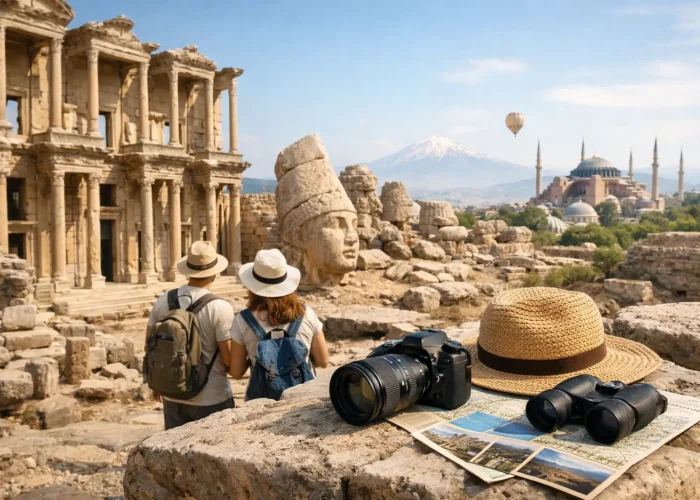
Some trips are built around hotel upgrades and restaurant reservations. A Turkey archaeology tour package is different. It is built around time – Bronze Age cities, Hellenistic sanctuaries, Roman streets, Byzantine layers, and the expert guidance needed to make each site feel legible rather than overwhelming.
For travelers who want more than a quick photo stop at famous ruins, the right package turns Turkey’s archaeological wealth into a coherent, comfortable journey. It should do two things at once: deliver serious historical depth and remove the practical friction that often comes with visiting large, complex sites spread across multiple regions.
What a Turkey archaeology tour package should actually include
Not every archaeology-focused trip is designed for the same traveler. Some itineraries are essentially standard sightseeing routes with a few ancient sites added in. Others are carefully structured around chronology, regional history, and site quality. If archaeology is the reason for the trip, that distinction matters.
A well-designed Turkey archaeology tour package should begin with private or highly personalized guiding. At major sites like Ephesus, Troy, Pergamon, Aphrodisias, and Hattusa, context changes everything. Without it, you see columns, theater seating, and foundations. With the right guide, you understand trade networks, imperial politics, religious change, engineering, and the reasons a site mattered in its own time.
Transportation is the second non-negotiable. Turkey’s archaeological highlights are not concentrated in one compact area. Western Anatolia alone can fill a full itinerary, while central Turkey adds Hittite and Phrygian layers, and Istanbul introduces the Roman, Byzantine, and Ottoman continuities that complete the story. Private transfers, well-timed domestic flights, and realistic driving plans are what keep an archaeology trip from becoming exhausting.
The best packages also include pacing that fits the traveler. Some guests want a site-intensive program with long mornings in the field and museum time in the afternoon. Others want a balanced itinerary with archaeology, fine dining, scenic hotels, and softer cultural experiences woven in. Neither approach is better. It depends on whether the trip is a focused historical journey, a luxury vacation with strong archaeological content, or a mix of both.
The destinations that deserve a place in the itinerary
Turkey is one of the world’s richest archaeological landscapes, which means selection matters. Trying to include everything usually weakens the trip. A stronger approach is to choose sites that work together geographically and historically.
Ephesus and western Anatolia
For many travelers, Ephesus is the essential starting point. It is visually impressive, accessible, and rewarding even for guests without a deep academic background. The Curetes Street, the Library of Celsus, the Great Theatre, and the terrace houses create a site experience that feels immediate and vivid. Nearby, the Ephesus Archaeological Museum adds the smaller objects and sculptural pieces that help complete the picture.
Western Turkey also allows for deeper layering. Pergamon offers one of the great acropolis settings of the ancient world, while Aphrodisias is often a favorite among experienced travelers because of its scale, preservation, and relative calm. Sardis, Miletus, Didyma, and Priene can also be added depending on how specialized the itinerary needs to be. The trade-off is time. Adding too many secondary sites can reduce the quality of each visit if the days become rushed.
Troy and the north Aegean
Troy matters because of its cultural weight and archaeological significance, but it is not the most visually straightforward site in Turkey. That is exactly why expert interpretation is so valuable there. The appeal lies in its layered settlement history and the way myth, literature, and archaeology intersect. For travelers interested in the Bronze Age or the origins of Mediterranean historical memory, it can be a deeply worthwhile stop.
This region often works best when paired with Pergamon or with Istanbul, rather than forced into a short western loop that already includes too many long drives.
Central Anatolia and the Hittite world
If the goal is a broader view of Anatolian civilization rather than only the Greco-Roman period, central Turkey deserves serious attention. Hattusa, the Hittite capital, opens a very different chapter of ancient history. Yazilikaya adds ceremonial and religious context, while the Museum of Anatolian Civilizations in Ankara is one of the country’s most important museum visits for travelers who want to understand chronology across millennia.
This is the portion of a Turkey archaeology tour package that most rewards travelers with a strong pre-existing interest in ancient history. It is less immediately monumental than Ephesus, but often more intellectually satisfying for guests who want depth beyond the most famous names.
Istanbul as the historical frame
Istanbul is not usually marketed first as an archaeology destination, yet it is often the city that gives the trip its narrative frame. The Archaeological Museums, the Hippodrome area, Hagia Sophia, and the surviving traces of Constantinople connect classical antiquity to the Byzantine and Ottoman worlds. For many travelers, beginning or ending here helps organize everything they have seen elsewhere.
Why private planning makes a better archaeology trip
Archaeology travel has a logistical problem that luxury travelers quickly notice – the most important sites are remarkable, but they can be spread out, exposed to heat, and difficult to experience well in a generic group format. A private or tailor-made program solves that in practical ways.
It allows earlier starts at heavily visited sites, which improves both the atmosphere and the pace. It makes room for museum stops that group tours often skip. It also lets the itinerary adjust to energy levels. A couple celebrating an anniversary may want a slower afternoon after Ephesus and a vineyard dinner in the evening. A family with teens may want shorter site blocks and more interactive guiding. A history-focused pair may want to add inscriptions, urban planning details, or site comparison that would be too specialized for a standard coach tour.
This is where a premium operator earns its value. The quality is not just in the vehicle or hotel category. It is in how intelligently the trip is sequenced, how clearly the guides communicate, and how smoothly the day runs from pickup to site entry to the next destination.
How long should a Turkey archaeology tour package be?
Seven to nine days is often the sweet spot for travelers who want strong archaeological content without turning the trip into a nonstop survey course. That time frame can comfortably cover Istanbul plus western Anatolia, or Istanbul plus one focused regional program.
Ten to fourteen days allows a more ambitious route with room for central Turkey, boutique accommodations, and a less hurried rhythm. Beyond that, the question becomes less about quantity and more about specialization. Some guests want a grand overview. Others would rather spend two weeks concentrating on fewer regions and doing them properly.
The right answer depends on travel style. If you prefer a polished vacation feel with archaeology as the centerpiece, choose fewer destinations and better hotels. If your priority is site density, accept that some travel days will be long and museum fatigue is real.
Who this kind of trip is best for
A Turkey archaeology tour package appeals most to travelers who want substance with support. That includes couples marking a milestone trip, families with a serious interest in history, cruise guests extending their visit inland, and seasoned cultural travelers who have already seen Italy or Greece and want a destination with greater chronological range.
It is especially well suited to visitors who do not want to spend weeks coordinating domestic flights, regional transfers, timed entries, museum schedules, and guide quality on their own. Turkey rewards independent travelers, but archaeology-focused itineraries are one of the clearest cases where expert planning improves the result.
Bosphorus Gate Travel approaches this kind of journey as a curated experience rather than a fixed formula. That means the itinerary can be shaped around your historical interests, comfort preferences, and preferred travel pace while still maintaining the expert structure that gives the trip real depth.
Choosing the right package without overpacking the itinerary
The temptation with Turkey is to say yes to every famous name. Ephesus, Cappadocia, Pamukkale, Troy, Pergamon, Aphrodisias, Istanbul, Gobeklitepe – all deserve attention, but not all belong in the same trip. Strong itinerary design is partly about restraint.
A better package focuses on meaningful combinations. If archaeology is the central goal, ask whether each added destination deepens the story or simply fills the schedule. Ask how much time is actually allocated on site, not just whether the site appears in the brochure. Ask who will be guiding you and whether museums are treated as optional extras or essential parts of the experience.
The best journeys feel generous, not crowded. They leave room to stand quietly in a theater, spend longer in a museum gallery, or ask the kind of question that turns a visit into a lasting memory.
If you are considering a Turkey archaeology tour package, the most rewarding choice is usually the one that combines expert interpretation, thoughtful pacing, and the confidence that every detail has been handled well. Turkey offers ancient history on an extraordinary scale. The right trip lets you experience it with clarity, comfort, and the sense that you are seeing far more than ruins.