
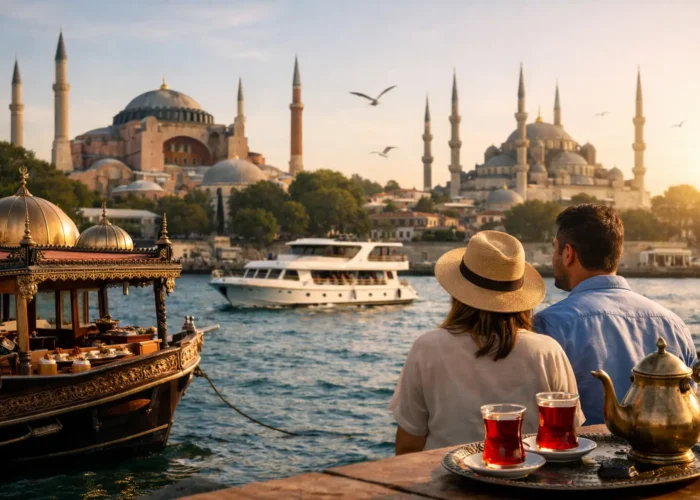
At the entrance to Hagia Sophia, the line can stretch across Sultanahmet Square before breakfast. A few streets away, the call to prayer rises over the former Hippodrome, while ferries begin crossing the Bosphorus between Europe and Asia. An Istanbul cultural travel guide is most valuable when it helps you move beyond checking landmarks off a list and experience these moments with context, comfort, and enough time to absorb them.
Istanbul is not a city that reveals itself in a single afternoon. It was the capital of the Roman, Byzantine, and Ottoman empires, and its living culture is shaped as much by neighborhood cafés, artisan workshops, markets, and family kitchens as by its monumental architecture. For travelers who value depth without sacrificing ease, a private, expertly paced itinerary makes a meaningful difference.
Build Your Istanbul Cultural Travel Guide Around Three Eras
The historic peninsula is the natural starting point, but it should not be treated as a collection of isolated attractions. The great sites of Sultanahmet tell a connected story of imperial power, faith, trade, and changing identity.
Hagia Sophia is essential not simply because of its scale, but because it has stood at the center of Istanbul’s religious and political life for nearly 1,500 years. A knowledgeable guide can point out details that are easy to miss independently: the Byzantine mosaics, the immense dome, the imperial door, and the later Ottoman additions that transformed the building without erasing its earlier history.
Across the square, the Blue Mosque offers a different expression of sacred architecture. Its cascading domes and six minarets are best appreciated with an understanding of mosque etiquette and prayer times. Since active worship continues throughout the day, access and timing can vary. A thoughtful itinerary builds in flexibility rather than promising a rushed visit at a fixed minute.
Topkapi Palace adds the human dimension of the Ottoman court. The courtyards, kitchens, treasury, and Harem reveal how the sultans governed an empire that reached across three continents. The Harem, in particular, rewards unhurried attention. It was not merely a private residence but a complex institution where dynastic life, education, hierarchy, and diplomacy intersected.
The Basilica Cistern provides a dramatic contrast. Beneath the streets, its forest of marble columns recalls the sophisticated infrastructure of Constantinople. Its cool, shadowed atmosphere is a welcome reset after the crowds and bright stone of the old city.
Choose Quality Over a Longer Checklist
The most common mistake in Istanbul is trying to see every major attraction in one day. The city’s distances, hills, security procedures, and crowds make an overfilled schedule tiring, even for experienced travelers. It is usually better to pair two or three significant sites with time for a proper lunch, a neighborhood walk, and a quieter cultural encounter.
Private guiding is especially valuable here because the day can adapt to real conditions. A guide can shift the order of visits when a museum is busiest, explain local customs before you arrive, and focus commentary on the subjects that interest you most, whether that is Byzantine art, Ottoman diplomacy, Islamic architecture, or daily life in modern Turkey.
Skip-the-line arrangements can reduce unnecessary waiting at eligible sites, but they do not replace good planning. Security checks and religious closures may still apply. The best experience comes from combining advance arrangements with a realistic pace and a guide who knows how to navigate the city gracefully.
A balanced first day in the old city
For many first-time visitors, begin early in Sultanahmet with Hagia Sophia and the Blue Mosque, then continue to Topkapi Palace and its Harem. Lunch in the historic center creates a natural break before an afternoon visit to the Basilica Cistern or the Archaeological Museums. The latter are often overlooked, yet their collection offers exceptional context for the civilizations that shaped Anatolia and the eastern Mediterranean.
If your time is limited, do not force the Grand Bazaar into the same day simply because it is nearby. The bazaar deserves its own rhythm, ideally paired with the Spice Market and a walk through the commercial districts around Eminönü.
Follow the Bosphorus to Understand Istanbul
The Bosphorus is not scenery at the edge of the city. It is one of Istanbul’s defining cultural corridors. For centuries, palaces, mosques, wooden waterfront mansions, fortresses, and fishing villages developed along its shores, linking the Black Sea to the Mediterranean and Europe to Asia.
A private Bosphorus cruise offers a more composed perspective than a crowded public crossing, particularly for couples, families, or travelers celebrating a special occasion. From the water, you can see the Ottoman waterfront palaces, the Rumeli Fortress, elegant yali residences, and the changing texture of neighborhoods on both continents. Morning light can be especially clear, while an evening cruise offers a more atmospheric view of the illuminated skyline.
The choice depends on your priorities. A daytime cruise supports architectural photography and historical commentary. Sunset is ideal for romance and a relaxed end to the day. Either way, leaving time to step ashore in a waterfront neighborhood creates a richer experience than viewing the Bosphorus only from a boat.
Make Space for Istanbul’s Neighborhood Culture
Sultanahmet holds the icons, but Istanbul’s character becomes more personal in its neighborhoods. Crossing to the Asian side is worthwhile for travelers with at least three full days in the city. Kadıköy is known for its market streets, cafés, food culture, and local energy, while Üsküdar offers mosque-lined squares and memorable views back toward the historic peninsula.
On the European side, Galata and Karaköy combine Genoese history, galleries, design shops, and old merchant streets. A walk from Galata Tower toward the waterfront can be paired with a visit to the nearby Istanbul Modern area, depending on your interest in contemporary art. In contrast, Balat and Fener reveal colorful facades, Orthodox heritage, steep lanes, and a more residential side of the former Byzantine districts.
These areas should not be approached as staged photo stops. Their appeal lies in the details: a neighborhood bakery, a tea garden, a small antique dealer, a church exterior, or the rhythm of a local market. An expert guide helps introduce these places respectfully and places them within the city’s broader social history.
Let Food Be Part of the Cultural Itinerary
Istanbul’s cuisine reflects the same layers as its architecture. Ottoman court traditions, Anatolian regional cooking, Black Sea ingredients, Aegean vegetables, Balkan influences, and the city’s historic trading networks all appear on the table.
A cultural food experience should go beyond sampling a few famous dishes. In the Spice Market area, learn why dried fruits, coffee, lokum, cheeses, and spices remain central to Istanbul’s food culture. In Kadıköy, explore the everyday market tradition through seafood, meze, bakeries, and specialty shops. In a refined restaurant, consider a menu that interprets Turkish regional cuisine with contemporary presentation.
There is no single “best” food itinerary. Families may prefer familiar flavors and a relaxed market visit, while serious food travelers may want a longer tasting route with regional specialties. Dietary needs can be accommodated most effectively when they are shared in advance, allowing reservations and menu selections to be arranged with care.
Experiences worth arranging ahead
Some cultural experiences are far more rewarding when planned before arrival. A traditional hammam treatment can be wonderfully restorative after a day of walking, but the setting, service level, and privacy options vary considerably. A Turkish coffee reading, calligraphy workshop, whirling dervish performance, or private culinary class can also add dimension when selected thoughtfully rather than inserted as a generic add-on.
For a meaningful experience, consider these four elements:
- A setting with genuine cultural relevance rather than a purely tourist-oriented performance
- Timing that complements, rather than exhausts, your sightseeing day
- Clear expectations about dress, participation, and photography
- Private or small-group access when intimacy and personal attention matter
Plan for Comfort, Access, and Timing
Istanbul is rewarding but physically demanding. Many historic streets are cobbled, sidewalks can be uneven, and the old city includes gentle but persistent hills. Luxury transportation is valuable not only as a convenience, but as a way to preserve energy for the sites that matter most. It is particularly helpful for multigenerational families, cruise guests with limited time, and travelers visiting during summer heat or winter rain.
Season also shapes the experience. Spring and fall generally offer the most comfortable walking weather, though major sites remain busy. Summer provides long days and lively evenings, but midday sightseeing requires careful pacing. Winter can be quieter and atmospheric, with occasional rain and cooler temperatures. There is no wrong season, but each one benefits from a tailored plan.
Cruise passengers should be especially cautious about overly ambitious shore schedules. Traffic can be unpredictable, and returning to port on time is nonnegotiable. A private shore excursion with reserved transportation, a clear route, and real-time oversight provides reassurance while still delivering a substantial cultural experience.
A More Meaningful Way to See Istanbul
The finest Istanbul journeys are not measured by how many ticket stubs you collect. They are remembered for the moment a guide explains the meeting of Byzantine and Ottoman worlds beneath Hagia Sophia’s dome, the taste of fresh simit beside the ferry, or the quiet view from the Asian shore at sunset.
Bosphorus Gate Travel can curate a private Istanbul experience around your pace, interests, accommodations, and preferred level of access. With the right local guidance, Istanbul becomes less overwhelming and far more personal – a city whose history is not simply observed, but felt.