
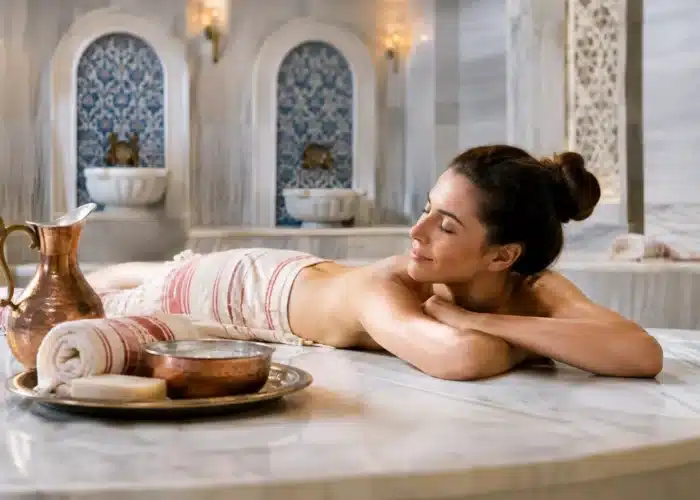
A Turkish bath is one of the rare travel experiences that asks you to slow down completely. Turkish bath experiences are not simply about a treatment or a beautiful historic room. They are a centuries-old ritual of warmth, water, cleansing, and restoration, best enjoyed when there is no need to rush to the next landmark.
For travelers who spend their days walking Istanbul’s historic districts, climbing through Cappadocia’s valleys, or exploring the ruins of Ephesus, a hammam can be a deeply welcome pause. It is also a meaningful introduction to Turkish culture: social, sensory, and shaped by traditions that remain part of everyday life.
What Makes a Turkish Hammam Different
A traditional hammam is built around progressive heat rather than the intense dry heat of a sauna. Guests typically begin by settling into a warm marble room known as the sıcaklık, often beneath a domed ceiling pierced with small star-shaped lights. The warmth encourages the body to relax before the cleansing ritual begins.
At the center of the room is usually a heated marble platform called a göbek taşı, or “belly stone.” Here, an attendant may perform a kese exfoliation using a textured mitt, followed by a foam wash created with warm water and clouds of olive-oil-based soap. The treatment is direct, invigorating, and surprisingly restorative after long-haul flights or busy touring days.
The experience is less about silence and individual privacy than many American spa guests expect. Traditional hammams have a sense of shared ritual and architectural drama. Water runs into marble basins, attendants move with practiced efficiency, and conversations may carry softly through the steam. Private options are available, but choosing a traditional setting offers a closer connection to the ritual itself.
Turkish Bath Experiences in Istanbul
Istanbul is the natural place to plan a hammam visit, not only because of its exceptional historic bathhouses but because a bath fits beautifully into a well-paced city itinerary. After a morning at Hagia Sophia, Topkapı Palace, or the Grand Bazaar, the warmth of a hammam offers a welcome contrast to crowded streets and stone courtyards.
The city’s landmark hammams reflect different eras of Ottoman design. Some date to the 16th century and were created by renowned imperial architects; others occupy restored buildings with a more contemporary luxury approach. A grand historic setting can make the occasion unforgettable, while a boutique hammam may provide a quieter, more personalized atmosphere. The right choice depends on whether architecture, privacy, a traditional communal environment, or elevated spa comforts matters most to you.
For couples, the key question is whether the hammam offers private suites or coordinated appointments. Traditional facilities commonly separate men and women, sometimes by distinct sections and sometimes by scheduled hours. This is entirely normal, but it should be confirmed before booking, especially for honeymooners or travelers hoping to share the experience together.
A private hammam service is often ideal for families, first-time visitors, or anyone who prefers a more discreet setting. It can also make timing easier when your Istanbul schedule includes a private guide, museum reservations, or a Bosphorus cruise. Public and semi-private rituals, meanwhile, may feel more authentic to travelers who are comfortable embracing the local format.
What to Expect During Your Visit
Most hammam visits begin in a cool or warm reception area, where you change and receive a pestemal, the lightweight woven cloth traditionally used for coverage. Many venues provide slippers, towels, and basic amenities, although details vary. Guests then move gradually into warmer spaces before the main ritual begins.
A classic service generally includes time in the heated room, exfoliation, a foam massage or wash, and a rinse with bowls of warm water. Some establishments add an oil massage, face mask, scalp treatment, or quiet relaxation time afterward. These additions can be lovely, but the kese and foam ritual are the defining elements of a traditional Turkish bath.
Expect the exfoliation to be firmer than a typical spa scrub. A skilled attendant will adjust pressure when asked, so do not hesitate to speak up if you have sensitive skin or would prefer a gentler treatment. The foam wash is usually the most memorable moment: soft, fragrant bubbles are worked over the body in a ritual that feels both playful and ceremonial.
Afterward, allow time to rest. Many hammams offer tea, water, or a lounge area, and this is not a moment to hurry through. Your skin may feel exceptionally smooth, and the warmth can leave you pleasantly sleepy. Scheduling a bath near the end of the afternoon or before a relaxed dinner is often more enjoyable than fitting it between major sightseeing stops.
Choosing the Right Hammam for Your Travel Style
Not every bathhouse offers the same experience, and the most famous name is not always the best match. Historic significance, service style, privacy, accessibility, and location all matter. A well-chosen hammam should complement the rhythm of your trip rather than become another reservation to manage.
Consider these practical distinctions before confirming your visit:
- Historic public hammams offer remarkable architecture and a closer connection to local tradition, though they may be busier and more structured.
- Luxury hammams usually provide polished facilities, premium products, and more private service options, often at a higher price point.
- Hotel spas with hammam rituals can be convenient and comfortable, but they may feel less rooted in the atmosphere of a centuries-old bathhouse.
- Private hammam suites are especially appealing for couples, families, and travelers who value discretion, flexible pacing, and dedicated attention.
Location should guide the decision as well. In Istanbul, a hammam near Sultanahmet works well during a stay focused on the Old City, while options around Galata, Karaköy, and Taksim may be more convenient for travelers staying on the European side near restaurants, galleries, and the Bosphorus.
Outside Istanbul, modern hotel hammams and local bathhouses can add a restorative element to a longer journey. Cappadocia is particularly well suited to a relaxing bath after a sunrise balloon flight and a day of private valley exploration. In coastal destinations, a hammam can be a refreshing reset between archaeological touring and time by the sea.
Etiquette That Helps You Feel at Ease
A few simple expectations will make your first visit more comfortable. Arrive hydrated, avoid a heavy meal immediately beforehand, and leave valuable jewelry at your hotel. The heat and scrubbing can be intense for some guests, so those with medical concerns, recent surgery, skin conditions, or pregnancy should seek medical guidance and notify the venue in advance.
Modesty standards vary. In gender-separated traditional spaces, guests typically wear a pestemal, while some venues have their own guidelines for swimwear or disposable undergarments. Your attendant will guide the process, but asking questions at check-in is always appropriate. Professional hammams are accustomed to international visitors and should explain what is included, what to wear, and what will happen during the service.
Tipping practices vary by venue, so it is useful to ask whether gratuity is included in the quoted price. Also confirm the treatment length. A quick exfoliation and foam wash may be perfect after a day of touring, while a longer private ritual can become a centerpiece of a special evening.
Make the Ritual Part of a Thoughtful Itinerary
The best Turkish bath experiences are planned with intention. A hammam is particularly rewarding after arrival in Turkey, midway through an active itinerary, or on the final evening before departure. It gives the body time to recover and creates a calmer memory than one more rushed attraction.
For a customized journey, a knowledgeable local planner can coordinate the right bathhouse around your hotel, touring schedule, privacy preferences, and desired level of service. That small degree of planning matters in a city like Istanbul, where traffic, changing opening hours, and the layout of historic neighborhoods can affect an otherwise simple reservation.
When you leave the marble warmth and step back into Istanbul’s evening air, you may notice the city differently: unhurried, lighter, and ready for one more beautiful meal or walk along the Bosphorus. That lingering sense of renewal is precisely why a hammam deserves a place in a carefully curated Turkish journey.