
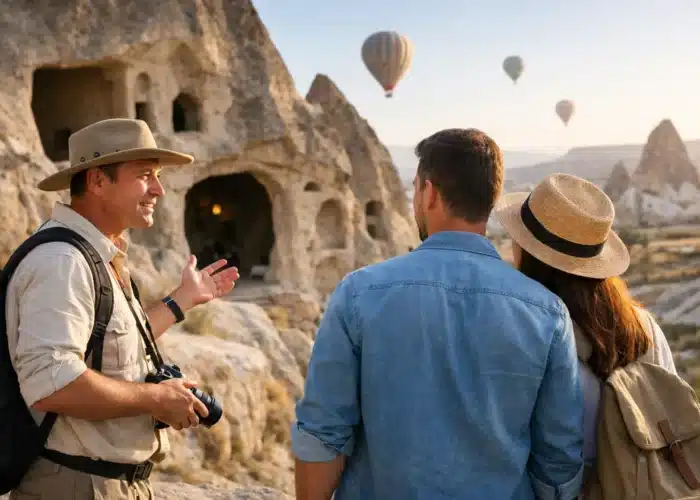
Cappadocia’s cave landscapes are not a single attraction with one entrance. They are a remarkable network of rock-cut churches, monastic chambers, underground cities, ancient homes, and cave hotels spread across several valleys. Knowing how to visit Cappadocia caves means choosing the right sites, pacing the day well, and understanding which spaces are open to visitors – and which are best appreciated with an expert guide.
For travelers who value cultural depth without unnecessary logistical friction, Cappadocia is most rewarding as a thoughtfully planned private experience. The region’s history is layered into its soft volcanic rock, but its geography can be confusing without local knowledge. A curated itinerary turns a series of stops into a meaningful journey through Byzantine art, early Christian life, and Anatolian landscapes.
Understand What “Cappadocia Caves” Means
The term can describe several very different experiences. Above ground, Cappadocia is known for cave dwellings and chapels carved into tuff, the soft rock created by ancient volcanic activity. Many of the most significant examples sit within the Göreme Open-Air Museum, Zelve Open-Air Museum, and quieter villages such as Çavuşin.
Below ground, the caves become an extraordinary subterranean world. Underground cities such as Kaymaklı and Derinkuyu contain narrow corridors, ventilation shafts, storage rooms, kitchens, stables, and places of worship. These were not brief shelters. They were complex communities designed to protect residents during periods of danger.
Then there are Cappadocia’s cave hotels. Staying in one can be an unforgettable part of the region, but these are private accommodations, not historic sites that visitors may enter freely. A well-selected cave suite offers the atmosphere of carved-stone living while providing the comfort, heating, and modern amenities discerning travelers expect.
How to Visit Cappadocia Caves Comfortably
The best approach depends on your interests, mobility, and available time. Most visitors benefit from combining one major rock-cut museum with one underground city rather than trying to see every cave site in a single day. These locations are compelling, but stairs, uneven paths, low ceilings, and confined passageways can become tiring when rushed.
Begin with Göreme Open-Air Museum if Byzantine art and sacred history are priorities. Its rock-cut churches hold frescoes that reveal centuries of Christian worship in the region. The Dark Church is especially valued for its preserved paintings, although access may require a separate admission charge and can be limited by preservation measures. A guide provides essential context here, helping distinguish an ordinary-looking carved chamber from a chapel with a remarkable religious and artistic story.
For a broader sense of former village life, Zelve Open-Air Museum offers expansive scenery, carved homes, and monastery spaces across several valleys. It generally feels more open than Göreme, making it an appealing choice for travelers who prefer walking outdoors amid dramatic formations. Çavuşin, nearby, can also be a rewarding addition for those interested in a less formal, more atmospheric setting.
Underground cities require a different mindset. Kaymaklı is often a strong choice for travelers who want to experience Cappadocia below ground without committing to the deepest or most demanding passages. Derinkuyu is larger and more dramatic, descending farther into the earth. However, it can feel more intense for guests with claustrophobia, knee concerns, or limited mobility. Neither site is ideal for someone who is uncomfortable in narrow, enclosed spaces.
A private driver and knowledgeable guide make the experience significantly easier. Rather than navigating rural roads, parking areas, admission lines, and site sequence independently, you can focus on the places themselves. Private transportation also allows for a flexible pace, including time for scenic overlooks, a leisurely lunch, or a change of plans if a site feels too crowded or physically demanding.
Choose the Right Time of Day and Year
Cappadocia is a year-round destination, yet each season changes the experience. Spring and fall offer the most comfortable conditions for walking among open-air cave sites. Days are typically pleasant, landscapes are especially beautiful, and daylight supports unhurried sightseeing.
Summer brings longer days and vibrant activity, but midday sun can be strong in exposed valleys. If you are traveling between June and August, schedule outdoor sites early in the morning or later in the afternoon. An underground city can be a welcome cooler stop during the warmest part of the day, although its interior may still feel crowded at peak visiting hours.
Winter is quieter and can be deeply atmospheric, particularly when snow settles across the fairy chimneys. Some paths may be slick, and weather can affect balloon flights and driving conditions, but cave museums and underground sites remain compelling. For couples seeking a more intimate Cappadocia stay, winter can offer excellent value and a calmer pace.
Arrival time matters as much as season. Göreme Open-Air Museum and the principal underground cities are most enjoyable early in the day, before large groups arrive. Guests staying in Cappadocia for two or more nights have the advantage of spreading their visits across separate days, avoiding the pressure to combine a sunrise balloon flight, a full day of sightseeing, and a long transfer all at once.
What to Wear and Bring
Cappadocia’s cave sites are historic environments rather than polished indoor museums. Comfortable, closed-toe walking shoes with good traction are the most useful item you can bring. Stone floors may be uneven, stairways can be steep, and some underground-city passages require careful footing.
Dress in light layers. Cave interiors often feel cool even when the weather outside is warm, while exposed valleys can shift quickly from chilly mornings to sunny afternoons. In summer, sunglasses, sunscreen, and a hat are sensible. In winter, a warm outer layer and shoes suitable for damp or icy paths will make a noticeable difference.
Bring a small bag rather than a large backpack, especially for an underground city. Tight corridors and low openings are easier to navigate when you are carrying less. Keep water with you for outdoor visits, but avoid eating or drinking inside protected historic interiors unless it is clearly permitted.
Respect Access Rules and Fragile Interiors
Cappadocia’s cave churches and underground structures have endured for centuries, but they remain vulnerable. Follow marked routes, do not touch frescoes or carved surfaces, and observe any no-photography signs. Flash photography is often prohibited in painted churches because light exposure can contribute to deterioration.
Access rules may change due to restoration, weather, visitor volume, or conservation needs. A knowledgeable local guide can adjust the day around closures and recommend worthwhile alternatives rather than allowing one restricted chamber to disrupt the experience.
It is also wise to separate historic access from private property. Some cave homes, hotels, and restaurants are active businesses or residences. Admire them respectfully from designated areas unless you are a guest or have been invited inside. The most memorable encounters with Cappadocia come from approaching the landscape as a living cultural environment, not a backdrop for hurried photographs.
Plan a Day That Feels Complete, Not Rushed
A well-paced cave-focused day often begins with Göreme Open-Air Museum or a valley walk, followed by a relaxed lunch in Göreme, Uçhisar, or Avanos. The afternoon can then lead to Kaymaklı or Derinkuyu, with a stop at Uçhisar Castle or a panoramic viewpoint on the return.
Travelers with more time can dedicate a second day to Zelve, Paşabağ, Devrent Valley, and an artisan visit in Avanos. This approach makes room for the region’s scenery, ceramics, and food rather than treating every hour as a checklist. It also creates space for a sunrise hot air balloon flight, which is often best followed by a late breakfast and a gentler morning.
For families, the underground city should be selected carefully based on children’s comfort with dark, narrow passages. For honeymooners and luxury travelers, a private itinerary can balance historic exploration with a cave-hotel spa experience, vineyard lunch, or sunset terrace time. There is no single correct route through Cappadocia. The right one reflects how you want to experience it.
Why a Private Guide Adds Meaning
Cappadocia’s visual appeal is immediate, but its significance is not always self-evident. A guide can explain how volcanic geology made carved settlements possible, why early Christian communities used these valleys, and how the frescoes connect to the larger Byzantine world. That interpretation transforms a carved room from an interesting stop into a place with human purpose.
Private guiding also brings practical reassurance. Your day can be adjusted for mobility needs, museum timing, weather, photography interests, and preferred meal style. Bosphorus Gate Travel can arrange an expertly curated Cappadocia experience with private transportation, knowledgeable local guidance, and a pace designed around your travel style.
Give the caves enough time to become more than a series of photographs. When you pause in a painted chapel, descend carefully into an underground passage, or watch evening light settle over the valleys from your cave hotel terrace, Cappadocia reveals the quiet detail that makes the journey unforgettable.