
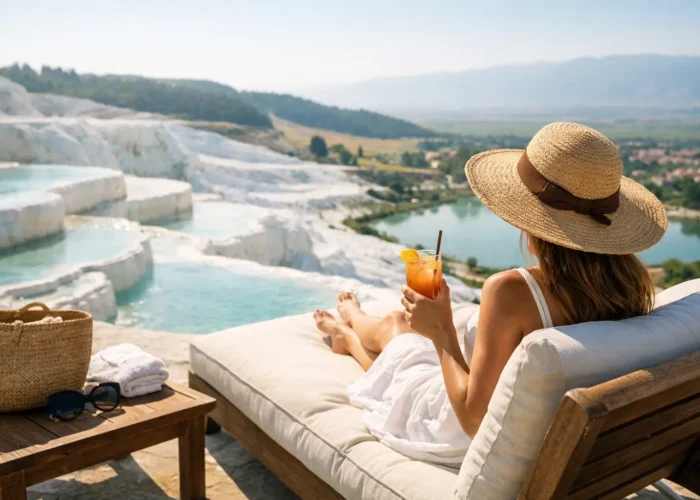
Pamukkale is one of Turkey’s most photographed landscapes, but its white travertine terraces are only part of the experience. The ancient spa city of Hierapolis rises directly above them, with a vast necropolis, Roman theater, thermal waters, and views across the Menderes Valley. Knowing how to plan Pamukkale visit details around timing, transportation, and the pace of your day makes the difference between a rushed photo stop and a memorable cultural experience.
For most travelers, Pamukkale works best as a thoughtfully planned overnight stay or as a private day excursion paired with the ancient city of Ephesus. The right choice depends on where you are coming from, how much time you have in Turkey, and whether you prefer to linger in the thermal atmosphere after the day visitors have left.
Choose the Right Time for Pamukkale
Pamukkale is beautiful year-round, though the experience changes with the season. April through June and September through October offer the most comfortable temperatures for walking through Hierapolis and along the terraces. Spring brings green hillsides and pleasant daylight, while fall generally offers warm conditions without the peak-summer intensity.
July and August are ideal for travelers combining Pamukkale with the Aegean coast, but midday heat can be considerable. Start early, use sun protection, and build in a proper lunch break rather than attempting to see every section of the site at once. Winter is quieter and can be atmospheric, particularly when warm mineral water meets cool air, although rain and cooler temperatures may limit time on the exposed terraces.
Aim to enter near opening time whenever possible. The terraces are calmer, photographs are softer in the early light, and you can explore Hierapolis before the central pathways become busy. Site hours and terrace access can vary by season, weather, and preservation work, so confirm current conditions shortly before your visit.
Decide Whether to Visit for a Day or Stay Overnight
A day trip can be highly rewarding when it is carefully organized. From Kusadasi or the Ephesus area, expect a full day of driving and sightseeing, generally around three hours each way depending on your exact starting point and traffic. From Izmir, the journey is shorter but still substantial enough to warrant an early departure.
An overnight stay in Pamukkale village is the more relaxed option for travelers who value an unhurried schedule. It allows time to visit the site in the morning or late afternoon, enjoy a hotel thermal pool, and avoid making the terraces feel like one more stop on a long itinerary. This is especially appealing for honeymooners, families, and guests traveling privately through western Turkey.
If you are coming from Cappadocia or continuing toward Antalya, Pamukkale can also serve as an elegant break between regions. In that case, private transportation is often the most comfortable choice, particularly with luggage and a multi-stop itinerary.
Plan Your Pamukkale Visit Around Hierapolis
The famous white slopes deserve attention, but Hierapolis is not an optional add-on. This UNESCO-listed archaeological site tells the fuller story of Pamukkale: a Roman and Byzantine healing center built around the same mineral springs that still flow through the landscape.
A well-paced visit usually begins with the travertines, where visitors follow designated routes and remove shoes to protect the mineral surface. The ground can be uneven and slippery, so carry a small bag for footwear and choose clothing that allows easy movement. The water depth varies, and not every pool is open for wading at all times.
From there, continue uphill into Hierapolis. The remarkably preserved Roman theater is a highlight, with carved stage reliefs and a broad view over the valley. Allow time for the main streets, monumental gates, temple areas, and the extensive necropolis. A knowledgeable private guide adds real value here, connecting the ruins to the city’s role as a sanctuary of healing rather than simply pointing out individual structures.
The Antique Pool, often called Cleopatra’s Pool, is another worthwhile consideration. Swimming among submerged ancient columns is a distinctive experience, but admission is generally separate from the main archaeological site and availability may be affected by operational conditions. It is best viewed as a leisurely addition, not a replacement for exploring Hierapolis itself.
Select the Best Entrance and Route
Pamukkale has more than one access point, and your entry choice affects the flow of the day. The South Gate is convenient for travelers staying in Pamukkale village and provides direct access to the terraces. The North Gate is particularly useful for guests arriving by vehicle who want to begin with the necropolis and work their way through Hierapolis toward the travertines.
There is no single best route for every traveler. If photographs of the white terraces are your priority, use the South Gate early in the morning. If archaeology is your main interest or you want a gentler introduction to the historical site, beginning at the North Gate can be more comfortable. A private guide and driver can tailor the route to your walking preferences, mobility needs, and the day’s conditions.
Keep your visit focused. Most guests need three to five hours for the terraces, Hierapolis, and a relaxed lunch break. Add more time if you intend to swim, visit the museum, or explore the archaeological zones in depth. Trying to fit Pamukkale, Hierapolis, a thermal swim, and a long return drive into a few hurried hours rarely does the destination justice.
Arrange Transportation With Comfort in Mind
Denizli is the nearest major city and transport hub for Pamukkale. Domestic flights, rail connections, and road transfers can all work, but each suits a different itinerary. Travelers flying into Denizli should arrange a reliable onward transfer, while those arriving from coastal resorts often find that a private vehicle makes the day far more enjoyable.
Public transportation is possible for independent travelers, yet it can introduce waiting time, station transfers, and limited flexibility at the site. For couples, families, cruise guests, or travelers with a tightly planned Turkey itinerary, private transportation provides a more polished experience. You can depart at the ideal time, travel with luggage securely handled, pause for lunch at a quality local restaurant, and finish the day without navigating unfamiliar connections.
Bosphorus Gate Travel can incorporate Pamukkale into a personalized Aegean itinerary with private guiding, comfortable transportation, and pacing designed around your interests. This is particularly valuable when pairing the region with Ephesus, Kusadasi, Izmir, or a wider journey through Turkey.
What to Bring and What to Expect
Pamukkale is an outdoor archaeological landscape, not simply a viewpoint. Comfortable walking shoes are essential for Hierapolis, although you will remove them on the designated travertine route. Bring a sun hat, sunscreen, water, sunglasses, and a light layer for cooler mornings or evenings. If you plan to use the Antique Pool, pack swimwear and a change of clothes.
Avoid bringing large bags if possible. A compact day bag is easier to manage while moving between the terraces and ruins. Travelers with limited mobility should discuss the route in advance, as slopes, stone pathways, and uneven archaeological surfaces can be challenging. With the right entrance and vehicle access, however, the experience can be adapted more comfortably than many guests expect.
Photography is best approached with patience. The terraces can appear brilliantly white in full sun, but strong midday light may flatten the scene. Morning and late afternoon usually offer more dimension, while the wide views from Hierapolis reward travelers who look beyond the familiar pools.
Build a Day That Feels Like a Vacation
The most successful Pamukkale itinerary leaves room for enjoyment. Begin with an early arrival, experience the travertines before crowds build, then let Hierapolis unfold at a measured pace. Pause for lunch rather than eating on the move, and decide in advance whether a thermal swim is a priority or an optional indulgence.
If you stay overnight, reserve the late afternoon for the terraces and the following morning for the ruins, or reverse the order depending on light and temperature. This approach gives you the luxury of time, which is often the most exclusive element of a journey through Turkey.
Pamukkale rewards travelers who look past the postcard view. Give the mineral waters, the ancient healing city, and the quiet valley beyond the terraces enough time to make an impression, and the visit becomes one of the most distinctive moments of your Turkish itinerary.