
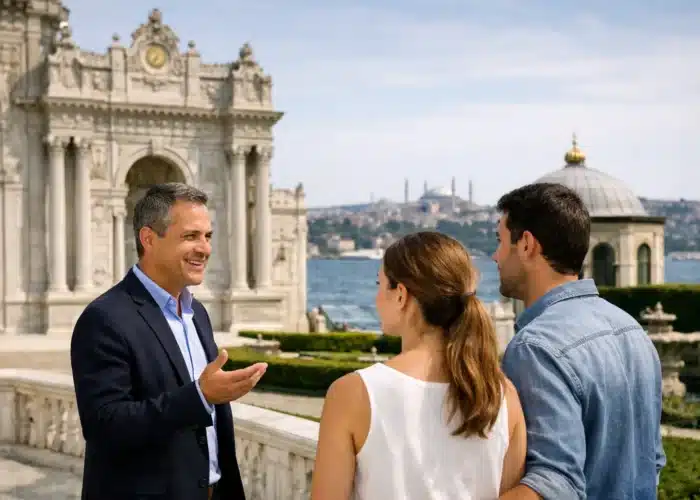
The difference between seeing an Istanbul palace and truly experiencing one often comes down to timing, context, and pace. Knowing how to tour Istanbul palaces means looking beyond grand chandeliers and ceremonial halls to understand the rulers, families, artists, and political decisions that shaped the Ottoman world. With a carefully planned private itinerary, these remarkable residences become far more than beautiful stops on a sightseeing schedule.
Istanbul’s palaces are spread across both sides of the Bosphorus, and each tells a distinct chapter of imperial history. Topkapi Palace reflects the intimate, layered world of the early Ottoman court. Dolmabahce presents the empire’s later European-facing ambition. Beylerbeyi Palace offers a graceful waterfront retreat designed for royal leisure and diplomatic hospitality. Trying to fit them all into one rushed day can reduce a meaningful experience to a series of photographs. A more considered plan creates space for the details that make each palace memorable.
Choose the Right Istanbul Palace Route
For most first-time visitors, Topkapi Palace and Dolmabahce Palace are the strongest pairing, but not necessarily on the same day. They represent very different periods, and each deserves unhurried attention.
Topkapi Palace sits within the historic peninsula near Hagia Sophia and the Blue Mosque. It served as the primary Ottoman royal residence for nearly four centuries and is best approached as a complex rather than a single building. Its courtyards lead visitors through the administrative, ceremonial, and private spaces of the empire. The Imperial Council Chamber, palace kitchens, sacred relics collection, treasury, gardens, and Harem each reveal a different aspect of court life.
Dolmabahce Palace occupies a commanding waterfront setting in the Besiktas district. Built in the 19th century, its scale, crystal, gilded interiors, and formal reception rooms reflect Ottoman engagement with European architectural fashion. It is particularly compelling for travelers drawn to design, diplomacy, and the final decades of the empire. The Ceremonial Hall is visually dramatic, but the quieter private apartments often provide the more human perspective.
Beylerbeyi Palace is a rewarding addition for travelers who want a less crowded experience and a chance to cross to Istanbul’s Asian side. Its Bosphorus setting is central to its appeal. The palace was used as a summer residence and to host distinguished foreign guests, and its lighter, more relaxed character contrasts beautifully with Dolmabahce’s grand public spaces.
Yildiz Palace and its surrounding park can suit repeat visitors or those with a special interest in Sultan Abdulhamid II and late Ottoman history. Access arrangements and open sections can vary, so it is wise to build this visit around current conditions rather than treating it as a fixed addition.
Plan Your Palace Visits Around Opening Days
Palace schedules, ticket procedures, restoration work, and guided-entry policies can change. Before setting your itinerary, confirm official opening days and hours for every palace on your list. Topkapi Palace and Dolmabahce Palace have traditionally observed different weekly closing days, which makes them ideal for a two-day plan if your Istanbul stay allows it.
Morning is generally the best time for Topkapi. Arriving near opening gives you a calmer first walk through the courtyards and helps you reach the Harem before the busiest period. Because the complex has several significant sections, allow at least three hours, and longer if Ottoman history is a central interest. The Harem requires separate admission in many ticketing arrangements and should not be treated as optional. It is one of the most revealing spaces in the palace, offering a more nuanced view of family life, hierarchy, education, and influence within the imperial household.
Dolmabahce is often easier to enjoy later in the morning or early afternoon, especially when paired with a Bosphorus drive, cruise, or lunch in a nearby waterfront neighborhood. Entry to certain areas may be organized by timed or guided groups, so a flexible schedule matters. A private guide can manage the sequence of the day, explain what you are seeing while waiting, and protect time for the surrounding Bosphorus views rather than leaving logistics to chance.
Allow room for security checks, ticket collection, and walking between rooms. Palaces are historic institutions, not attractions designed for speed. Large bags, tripods, and photography may be restricted in some interiors, while rules can differ from one section to another.
How to Tour Istanbul Palaces Without Rushing
A successful palace day is about selecting priorities. For a single full day, choose one major palace as the centerpiece and add complementary experiences nearby. Topkapi pairs naturally with the historic peninsula’s major monuments, although this works best when the day is paced carefully. A guest who wants to explore every gallery in Topkapi may prefer to reserve the Blue Mosque or Basilica Cistern for another day.
Dolmabahce works especially well with the Bosphorus. After touring the palace, continue along the European shore through Ortakoy, Arnavutkoy, and Bebek, or board a private yacht for a different view of the city. This route connects the palace to the waterway that influenced Ottoman trade, defense, ceremony, and daily life. It also offers a welcome change of rhythm after richly furnished interiors.
For two palace-focused days, begin with Topkapi and the old city on the first day. On the second, visit Dolmabahce, cross the Bosphorus to Beylerbeyi, and finish with a scenic drive or waterfront meal. This approach avoids spending most of the day in traffic while giving each palace enough room to make an impression.
Travelers with limited time, including cruise guests, should resist the temptation to schedule Topkapi, Dolmabahce, and Beylerbeyi consecutively. Istanbul traffic, security lines, and the sheer scale of the sites can make that itinerary stressful. In this situation, choose the palace that best suits your interests: Topkapi for early Ottoman history and the Harem, Dolmabahce for architecture and opulence, or Beylerbeyi for a refined Bosphorus-side visit.
What a Private Guide Adds to the Experience
The visual splendor of Istanbul’s palaces is immediate. Their meaning is not always as obvious. A knowledgeable licensed guide helps connect a tiled pavilion or ceremonial staircase to the people and events behind it. At Topkapi, that might mean explaining why the court was organized around successive courtyards, how the Harem functioned beyond popular misconceptions, or what the imperial kitchens reveal about the scale of palace life.
At Dolmabahce, a guide can place French-inspired interiors, imported materials, and monumental chandeliers within the empire’s changing political and economic landscape. The goal is not to turn a palace visit into a lecture. It is to give travelers enough context to recognize why a particular room, object, or viewpoint matters.
Private touring also provides practical advantages. Your guide and driver can sequence visits around current conditions, arrange ticketing as efficiently as possible, and adapt the day for mobility needs, family preferences, weather, or a late hotel departure. For guests who value privacy, this means moving at their own pace rather than following a fixed group schedule. It is particularly valuable for multigenerational families, couples celebrating a special occasion, and travelers who want time for photography or a leisurely lunch.
Dress, Etiquette, and Small Details That Matter
There is no formal dress code for palace visits comparable to a mosque visit, but polished, comfortable clothing is sensible. Choose shoes suitable for stone paths, stairs, and extended walking. Istanbul’s palace interiors can be warm in summer and cooler than expected in some seasons, so a light layer is useful.
Respect posted photography rules, keep voices low in smaller rooms, and follow staff instructions about route direction. These are working museums and protected historic spaces. A little preparation also makes the day more comfortable: carry water, keep valuables secure, and avoid planning a demanding evening immediately after a long palace itinerary.
If you are visiting during peak season, a private car is more than a luxury. It reduces the friction of moving between neighborhoods, especially when combining palaces on opposite shores of the Bosphorus. Bosphorus Gate Travel can tailor a palace experience with a licensed guide, private transportation, and carefully timed entry arrangements that fit the rest of your Istanbul stay.
The finest palace itinerary leaves you with more than images of gold leaf and waterfront facades. It gives you a clearer sense of how Istanbul became an imperial capital shaped by ceremony, ambition, family life, and the ever-present Bosphorus.