
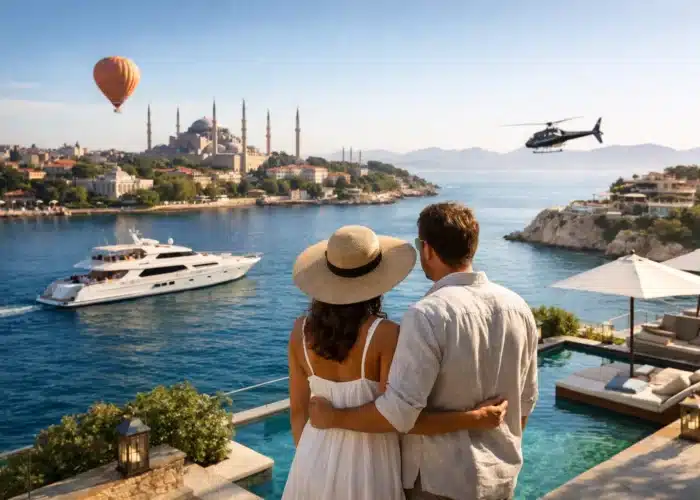
Turkey luxury travel trends are moving beyond the traditional definition of a five-star hotel and a private transfer. For discerning travelers, the new standard is a journey that feels personal at every stage: arriving at an Istanbul palace hotel with the right guide already waiting, entering Ephesus before the busiest hours, or watching dawn settle over Cappadocia from a quiet terrace rather than a crowded viewpoint.
Turkey is especially well suited to this shift. Its leading destinations combine world-class hospitality with layers of history, cuisine, landscape, and craftsmanship that reward thoughtful planning. The most memorable premium trips are no longer built around seeing more. They are designed around seeing the right places in the right way, with time to absorb each experience.
Turkey Luxury Travel Trends: Privacy With Purpose
Private touring remains one of the strongest trends in luxury travel to Turkey, but expectations have become more sophisticated. Travelers want more than a private vehicle. They want a guide who can read the pace of the day, explain a Byzantine mosaic or Ottoman neighborhood with real context, and adjust plans gracefully when a museum is busy or a family needs a slower afternoon.
This is particularly valuable in Istanbul, where the most rewarding days often combine major landmarks with less obvious moments. A private guide can create a balanced route through the historic peninsula, the Bosphorus, and a neighborhood food market without making the day feel rushed. Skip-the-line arrangements and a professional driver are not simply conveniences. They protect valuable vacation time and preserve the relaxed rhythm that luxury travelers expect.
Privacy also creates room for individual interests. A couple may prefer architecture, antique shopping, and a chef-led tasting. A multigenerational family may need shorter walks, flexible meal stops, and engaging stories for different ages. Cruise guests need assured timing around their ship schedule. The itinerary should reflect the traveler, not require the traveler to fit a fixed program.
Heritage Hotels Are Part of the Experience
Luxury travelers are increasingly choosing hotels for their sense of place, not just their amenities. In Istanbul, restored palaces, waterfront residences, and refined boutique properties offer a connection to the city’s imperial and maritime past. In Cappadocia, cave suites provide an entirely different kind of luxury: candlelit stone interiors, private terraces, and views across valleys shaped by centuries of settlement.
The appeal is emotional as much as aesthetic. A heritage stay turns downtime into part of the journey. Breakfast overlooking the Bosphorus or an evening in a restored Anatolian mansion can be as memorable as a major sightseeing stop.
There is a practical trade-off, however. Historic properties can have smaller rooms, more steps, or layouts that are less suited to travelers with mobility concerns. The best choice depends on the purpose of the trip. A honeymoon couple may value character and privacy above all else, while a family may prefer a larger contemporary suite with easier access and broader facilities. Expert planning means matching the hotel to the traveler rather than selecting the most photographed address.
Culinary Access Is Becoming More Personal
Turkey’s culinary reputation is drawing travelers who want to move beyond a list of famous dishes. They are seeking regional flavor, local technique, and meals with a story behind them. A well-planned journey might pair Istanbul’s refined restaurant scene with an intimate meyhane dinner, a market visit with a culinary specialist, or a private tasting focused on Turkish wines, olive oils, or artisanal sweets.
Regional travel adds depth. The Aegean coast offers olive oil-driven cooking, seasonal vegetables, seafood, and local wines. Cappadocia brings Anatolian recipes, clay-pot cooking, and vineyards set against dramatic volcanic terrain. Southeastern routes can introduce richer spice traditions and celebrated kebabs, although the right pace and routing matter when adding more distant regions to a first visit.
The trend is not simply toward exclusivity for its own sake. It is toward thoughtful access. Reservations at sought-after restaurants are valuable, but so is knowing when a humble neighborhood stop offers the more authentic and delicious meal. Private culinary experiences should feel generous and relaxed, not staged.
Cappadocia Is Expanding Beyond the Balloon Flight
A sunrise hot air balloon flight remains an iconic Cappadocia experience, and for many visitors it deserves its place on the itinerary. Yet luxury travel in the region is becoming more layered. Travelers are extending their stays to enjoy private valley walks, visits with local artisans, atmospheric dinners in cave settings, and guided exploration of underground cities and rock-cut churches.
Timing is central to the experience. Balloon flights are weather dependent, so a carefully designed itinerary should allow flexibility and ideally more than one possible flight morning. Travelers who treat the flight as the only reason to visit can be disappointed if conditions prevent a launch. Those who build in the region’s culture, landscape, and hospitality still have an exceptional stay regardless of the weather.
Cappadocia also demonstrates why luxury is often about pacing. Two or three nights allow guests to experience the region without trying to fit every valley, workshop, and viewpoint into one day. Private transportation makes this easier, especially for travelers who prefer unhurried mornings and scenic stops away from the busiest routes.
The Aegean Is Becoming a Longer, Slower Journey
Ephesus remains essential for travelers interested in the classical world, but luxury itineraries are broadening the experience around it. Instead of a quick visit from a port, travelers are spending time in the surrounding region: visiting the House of the Virgin Mary, exploring the terraces of ancient cities, tasting local wines, or enjoying a refined stay near the coast.
This slower approach is particularly appealing to travelers combining Turkey with Athens. The two destinations offer a compelling dialogue between Greek and Roman antiquity, Byzantine heritage, Ottoman history, and contemporary Mediterranean life. The logistics require careful coordination, but the result can feel far more coherent than treating each destination as a separate checklist.
For cruise passengers, the trend takes a different form. Time ashore is limited, so private shore excursions are increasingly built around precision. A knowledgeable guide, reserved transport, and realistic routing can make the difference between a rushed visit and a meaningful day at Ephesus or in Istanbul. The goal is not to crowd every minute with stops. It is to return to the ship with the feeling that the destination was genuinely experienced.
Wellness Now Means Space, Ritual, and Recovery
Wellness travel in Turkey is taking on a distinctly local character. Traditional hammam rituals, thermal waters near Pamukkale, private spa treatments, and restorative coastal stays offer travelers a way to balance active cultural touring with genuine rest. After days spent walking historic districts or archaeological sites, this rhythm matters.
The strongest luxury itineraries do not isolate wellness from culture. A hammam can follow a day exploring Istanbul’s old city. A thermal stay can complement a visit to Hierapolis and Pamukkale. A quiet Aegean property can provide recovery time between heritage sites and culinary experiences. When placed thoughtfully, these moments make a multi-region journey feel sustainable rather than exhausting.
What Premium Travelers Should Prioritize
The most successful trips to Turkey begin with a few clear decisions: how much independence feels comfortable, which experiences are truly nonnegotiable, and where a slower pace will add value. Travelers should be candid about mobility, dining preferences, tolerance for early starts, and the balance they want between landmark sightseeing and unstructured time.
Season also shapes the experience. Spring and fall are often ideal for Istanbul, Cappadocia, and archaeological touring, with generally more comfortable conditions for walking. Summer can be excellent for coastal stays and longer evenings, though major cities and popular sites may require earlier starts and more strategic scheduling. Winter offers a quieter, more atmospheric side of Istanbul and Cappadocia, but weather flexibility becomes especially important.
At Bosphorus Gate Travel, tailor-made planning is built around these details: private guiding, luxury transportation, carefully selected accommodations, and the local insight needed to make each day feel effortless. The value is not merely having reservations in place. It is having a journey designed with the confidence that every transition, priority, and personal preference has been considered.
Turkey rewards travelers who leave room for serendipity within a well-managed plan. A private table overlooking the Bosphorus, an unhurried conversation with a guide in an ancient city, or a second sunrise in Cappadocia may become the moments remembered longest. Choose an itinerary with enough structure to feel cared for and enough space to let the country surprise you.