
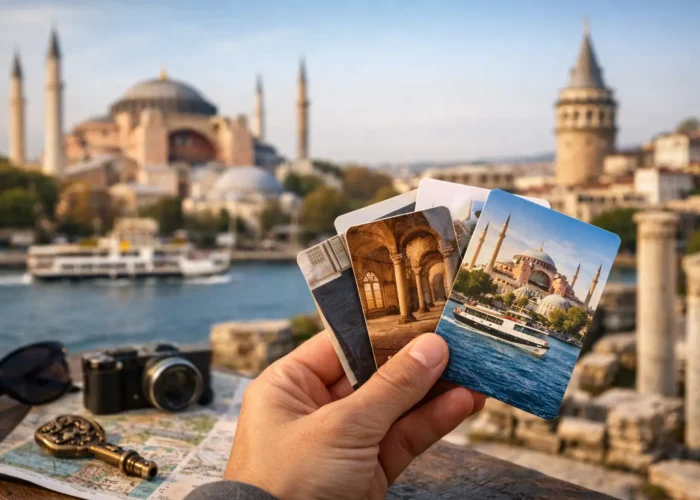
A morning at Topkapi Palace can set the tone for an entire Istanbul stay: Ottoman courtyards, the Bosphorus beyond the gardens, and galleries that reward unhurried attention. But before buying a multi-day attraction card, travelers often ask one practical question: is the Istanbul Museum Pass worth it? The answer depends less on the pass itself than on how you want to experience the city.
For independent travelers with several state museums on their list, it can be an efficient purchase. For visitors with limited time, a private guide, or a wish to include Istanbul’s most in-demand religious and privately managed sites, its value can be narrower than the marketing suggests. The best choice is the one that protects your time while leaving room for the experiences that matter most.
What the Istanbul Museum Pass Generally Covers
The Istanbul Museum Pass is designed around museums and historic sites administered by Türkiye’s Ministry of Culture and Tourism. Its exact price, validity period, included attractions, and entry procedures can change, so those details should always be verified shortly before travel.
In practical terms, the pass has traditionally been most relevant for visitors planning to enter several major museum sites, often including Topkapi Palace, the Istanbul Archaeological Museums, the Museum of Turkish and Islamic Arts, the Galata Tower, the Great Palace Mosaics Museum, and select smaller museums. Some sites may have separate sections, timed-entry rules, or exclusions, even when the main attraction is included.
That distinction matters. A pass is not a universal key to Istanbul. It typically does not cover every landmark travelers expect to see, nor does it replace reservations or special access where those are required. Hagia Sophia, for example, has had changing visitor arrangements in recent years. Basilica Cistern, Dolmabahce Palace, private museums, cruises, culinary experiences, and many guided experiences should be considered separately unless current terms specifically say otherwise.
When an Istanbul Museum Pass Is Worth It
The pass is most attractive when your itinerary naturally includes multiple eligible museums across consecutive days. It is not wise to buy one simply because it exists, then rush through galleries to justify the cost. Istanbul deserves better than a checklist.
It can be a sound choice if you are staying in the historic peninsula or central Istanbul for three or more full sightseeing days and have genuine interest in Ottoman, Byzantine, and archaeological collections. Topkapi Palace alone can take several hours when explored with care. Add the Archaeological Museums and the Museum of Turkish and Islamic Arts, and the value proposition becomes more compelling for a culture-focused traveler.
It may also be useful for travelers who prefer flexibility. Paying once can remove small ticket decisions from each day, particularly when you want to enter a museum spontaneously between a walk through Sultanahmet, lunch in Karakoy, or an afternoon along the Bosphorus.
A simple decision test is to compare the current pass price against the individual admission costs of the eligible sites you truly plan to visit. Then add a value for convenience, but be honest about your pace. The pass is usually a good fit when all four of these statements are true:
- You plan to visit at least three included paid sites during its validity period.
- Those sites are already priorities, not additions made only to recover the purchase price.
- Your schedule allows enough time to experience them without rushing.
- You are comfortable handling current entry rules and any separate reservations yourself.
If that describes your trip, the pass can offer meaningful savings and a more relaxed day-to-day rhythm.
When It Is Not the Best Value
For a first-time visitor with only one or two days in Istanbul, the museum pass is often unnecessary. The city’s most memorable moments do not all come with museum admission: a private Bosphorus cruise at sunset, a thoughtful visit to a neighborhood mosque, a Turkish breakfast overlooking the water, or an unplanned pause in the Grand Bazaar can be equally defining.
It is also less compelling for travelers who prioritize a small number of landmark sites and want interpretation, not simply entry. Topkapi Palace is far richer when its ceremonial spaces, imperial household, and political significance are explained in context. The same is true of the Hippodrome, Hagia Sophia, and Sultanahmet Square, where layers of Roman, Byzantine, Ottoman, and modern history sit within a short walk of one another.
A pass does not guarantee a private guide, hotel pickup, luxury transportation, carefully sequenced timing, or an expert who knows when an attraction is least crowded. Depending on the specific site and current operating procedures, it may not eliminate every wait either. In a city where traffic, prayer times, cruise schedules, and seasonal crowds affect the day, those details have real value.
Families should assess the pass carefully as well. Children may have separate eligibility or reduced admission arrangements, and younger travelers rarely enjoy museums at the same volume as adults. A focused, well-paced day with two exceptional sites is usually preferable to four hurried stops.
Museum Pass vs. a Privately Guided Istanbul Day
The choice is not always between buying a pass and skipping museums. Often, it is a choice between self-guided access and a curated experience built around your interests.
A privately guided day is especially valuable for travelers who want Istanbul’s essential highlights placed in a logical order. An experienced local guide can connect the palace to the empire that shaped it, explain the architectural conversation between Hagia Sophia and the Blue Mosque, and adjust the route when a line is longer than expected or an entrance schedule changes. This is not merely a matter of convenience. It creates space for a more meaningful encounter with the city.
For couples, multigenerational families, and travelers arriving from a cruise ship, time is often the most limited resource. A private itinerary can focus on the sights that fit your interests, whether that means Ottoman history, Byzantine art, food markets, design, or photography. It also avoids the false economy of saving on admissions while losing valuable hours to inefficient routing.
At Bosphorus Gate Travel, expertly curated private Istanbul experiences are designed around this principle. The day can include the city’s signature monuments while allowing time for the details that turn sightseeing into connection: a quiet courtyard, a favorite local lunch, or a scenic crossing between continents.
Plan Around the Sights You Cannot Miss
Before deciding on a pass, make a short list of your non-negotiable experiences. If your list centers on Topkapi Palace, the Archaeological Museums, and other included state museums, calculate the pass against individual tickets. If it centers on Hagia Sophia, the Blue Mosque, Basilica Cistern, a Bosphorus cruise, and neighborhoods such as Balat or Kadikoy, the pass may play only a supporting role.
It is also smart to consider museum closure days, opening hours, and religious observances before assigning sites to specific days. Istanbul’s attractions are close together on a map, but entry protocols and crowd patterns can reshape an itinerary quickly. A well-planned route groups nearby sights without treating the city like a race.
Travelers staying longer can use the pass more comfortably. Give Topkapi Palace its own morning, reserve another day for the Archaeological Museums and Sultanahmet, and leave room for the museums and neighborhoods across the Golden Horn. A slower approach makes the purchase easier to justify and the experience considerably more rewarding.
Frequently Asked Questions
Does the museum pass include every major Istanbul attraction?
No. It is generally centered on sites managed by the Ministry of Culture and Tourism. Major landmarks and experiences may be operated separately, have different admission terms, or require their own arrangements. Confirm the current inclusion list before purchasing.
Does the pass mean you can skip all lines?
Not necessarily. It may streamline ticket purchasing at eligible locations, but security screening, timed-entry systems, special sections, and seasonal crowd levels can still affect access. A pass should be viewed as an admission product, not a guarantee of immediate entry.
Should I buy it before arriving in Istanbul?
Only if your museum plan is already clear and you have checked the latest terms. Travelers who prefer a tailored itinerary may be better served by finalizing their sightseeing priorities first, then selecting the entry arrangements that fit the route.
The right Istanbul itinerary leaves room for both the grand landmarks and the moments no pass can plan for: tea beside the Bosphorus, the call to prayer moving across the old city, and a guide’s story that changes how you see the stones beneath your feet.